How to return serve early and rush the server
Take the ball early. Take the server's half-second with it.
See it, eight instants at a time.
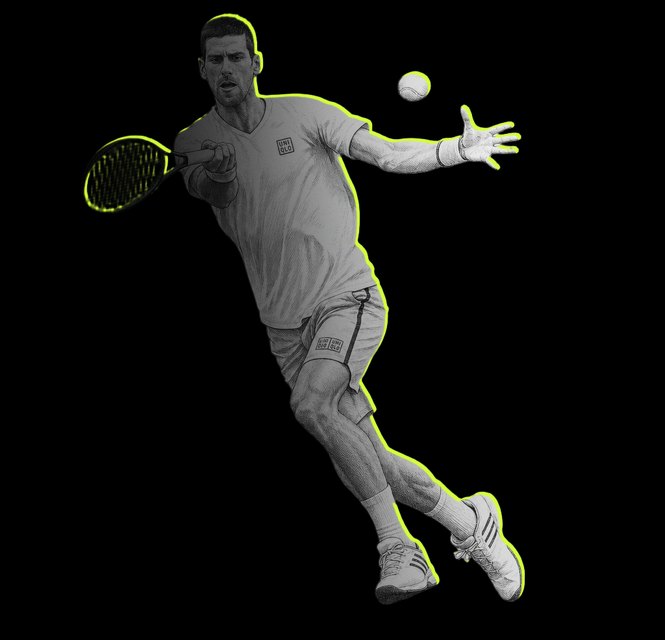
Every frame is traced from real match footage, so you see the shape of the stroke, not a drawing of an idea.
Key facts
- 1
In 2023 Novak Djokovic hit a serve +1 forehand on 473 of 945 second-serve points, about half, and won 57 % of them.
ATP Beyond the Numbers, November 2023
- 2
Djokovic wins about 55 % of second-serve return points and converts about 44 % of break points, the highest career composite measured.
ATP Beyond the Numbers, January 2026
- 3
A return that lands past the service line pushes the server back and erases the planned +1.
- 4
The safe aggressive return is deep and central, not at the lines.
Why it works
The server plans the serve and the next ball as one unit. That plan needs two things: a predictable, short reply, and the time to move to it. The early return doesn't beat the serve. It beats the server.
Depth takes away the first. A return past the service line pushes the server back and the +1 dissolves. Early contact takes away the second: the ball arrives before the server has recovered from the landing.
Andre Agassi built a career on the rising ball. The chip is the same idea at a lower height, followed to the net. It's the answer on grass or against a serve-volleyer, not the default.
The line to say on court“Deep first. Early when you can. Their clock is yours to shorten.”
Drill: The rise ladder
15 min · with a partner- Your partner feeds second serves. Hit ten returns from behind the baseline, letting the ball drop. Count the returns that land past the service line.
- Hit ten from on the baseline, making contact before the ball's peak. Count the deep ones and the errors.
- Hit ten from a step inside the baseline, taking the ball on the short hop. Count the deep ones and the shanks. Drop back a rung if the errors outnumber the deep balls.
More drills like this: return
Faults and fixes
Questions players ask
Should I take a kick second serve on the rise?
Yes, when you can. Letting it drop lets the kick climb into your shoulder and gives the server a full second. On the rise, contact is below the shoulder and a deep, central return jams the server.
When should I chip and come in on the return?
On grass or against a serve-volleyer. It's the same idea as the early return at a lower height, followed to the net.
Does return pace matter?
Less than depth and timing. Pace is optional. A return past the service line erases the server's plan even without pace.
How do I stop being late on early returns?
Shorten the backswing and lengthen the forward swing. Your rally backswing is too long for the time you have.
What this doesn't cover
There are no figures for how many errors hitting on the rise costs at club level, so count your own shanks and step back when they pile up. The idea that an early return breaks the serve +1 is pattern logic, not a measured effect.
Sources
- ATP Beyond the Numbers (November 2023): Djokovic's serve +1
- ATP Beyond the Numbers (January 2026): return and break-point records
- Brain Game Tennis, "The most important number in tennis"
- TennisOne on Agassi's return