How to hit a backhand slice in tennis
Slice low and deep. Make them hit up.
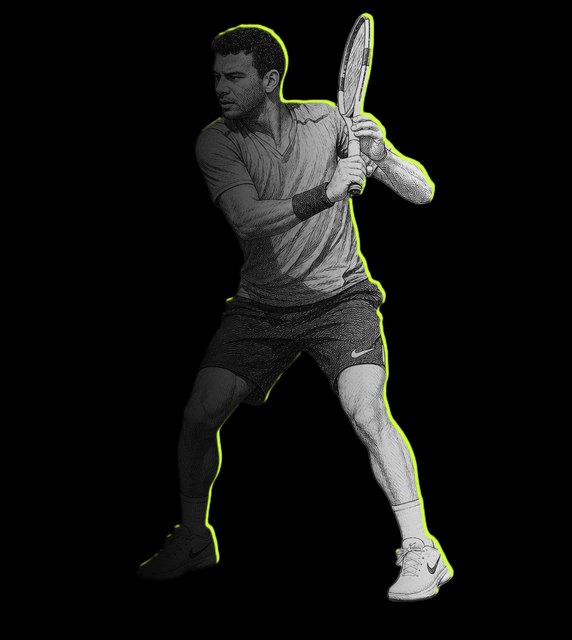
See it, eight instants at a time.
Every frame is traced from real match footage, so you see the shape of the stroke, not a drawing of an idea.
Key facts
- 1
Backspin flips the Magnus force so it points up, which makes a slice hang in the air and land deeper than it otherwise would.
- 2
At the bounce, backspin opposes forward roll, so a slice skids instead of gripping and stays low.
- 3
A continental grip is what lets you present the open face a slice needs. An eastern grip can't.
- 4
Federer's slice and his topspin one-handed backhand share the turn, the straight arm and contact in front. Only the swing plane and the face differ.
Why it works
The open face and the descending path put backspin on the ball. In the air, faster flow over the top means lower pressure there, so the net force points up. The ball hangs and its descent flattens, so it lands deeper.
At the bounce the spin works against forward roll, so the ball skids instead of gripping and stays low. Your opponent has to hit up from below the net. That's the whole tactic: not slower, lower.
Depth is the craft, not the spin. A short slice is the sitter that gives the shot its bad name. A chop stops the ball. A slice travels, because the strings carry it toward the target.
The line to say on court“High to low, and through.”
Drill: The depth ladder
15 min · with a partner- Drop-feed ten slices. Count only the balls that land in the back third of the court.
- Have your partner feed ten balls on the move. Aim for the same target.
- Play the low-skid game: cross-court slices only, and any ball that rises above your partner's shoulder loses the point. Play first to seven.
More drills like this: backhand
Faults and fixes
Questions players ask
Why does a slice stay low?
Backspin works against forward roll at the bounce, so the ball skids instead of gripping. It stays low and your opponent has to hit up.
Why does my slice float?
Usually the face is too open with no forward drive. Swing high to low and forward, and finish toward the target.
What's the difference between a slice and a chop?
A chop goes straight down and stops the ball, so it lands short and dead. A slice goes high to low and forward, and carries the ball deep.
When should I use a slice?
When you're pulled wide and off balance on the backhand, a deep slice buys time with a short swing. It also works as a reset, an approach, a chip return and a drop shot.
What this doesn't cover
A real slice carries sidespin as well as backspin. This covers only the pure backspin part. How low the ball stays after the bounce is modelled here, not measured. The advice doesn't say when a slice is the wrong tactic.
Sources
- The Conversation: "Spin has transformed modern-day tennis"
- Tennis Warehouse University: spin and string movement
- Tennis.com: the slice at Wimbledon
- TopspinPro: backhand slice guide